0:00Cold open: three little crises in five minutes
The lake, a hot afternoon. A child runs down off the jetty and scrapes a foot on a board, a second later there’s sand in the eye, and over by the blanket a wasp lands on the sandwich. You reach into the bag — there’s sun cream, there’s a towel, and one plaster, already gone soggy. A day by the water with a child can throw up three little “crises” in five minutes. This episode is about what to pack so they stay a moment’s pause and not the end of the day — all from the organising side, without getting into treatment.
Straight off, honestly: this isn’t an episode about how to treat a sting or an eye. A water kit is for minor first aid and for keeping a child’s medicines in order — not for rescue. With a near-drowning, a loss of consciousness, trouble breathing, a swollen face or a severe reaction, you ring 999 and call the lifeguard.
How is a water kit any different from the one at home? Everything works against you at once: water and wet sand (an ordinary plaster peels off after the first swim — hence waterproof ones), strong sun bouncing off the surface, and a child who’s harder to keep an eye on. And the thing people pack but don’t check is the sun cream from last summer — it has an expiry date and a separate period once it’s opened.
Where the app helps (and where it deliberately doesn’t):
And the most important sentence of the episode: by the water the most important thing isn’t the plaster and it isn’t the app — it’s constant supervision of the child, a lifeguarded beach and a lifeguard within sight. No kit replaces that.
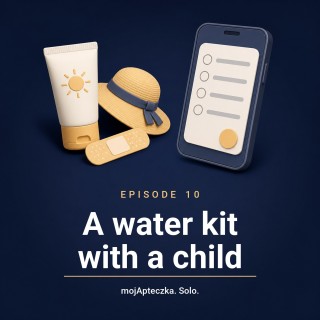
A short list for the water with a child: sun cream checked before you go, a hat and a T-shirt, waterproof plasters, a sterile dressing, antiseptic, tweezers, saline ampoules, something for bites and stings. Plus the child’s regular medicines: a supply and a reserve, an offline list, a shared family list. And over the lot of it — an eye on the child.
Materials:
⸻
About AI in this episode. The dialogue was written by Tomasz Szuster. The voices you hear are AI-generated synthetic voices — not recordings of the hosts. We say this straight out, because we think it should be the standard for any podcast made this way. Full details in the show notes and in the episode outro.