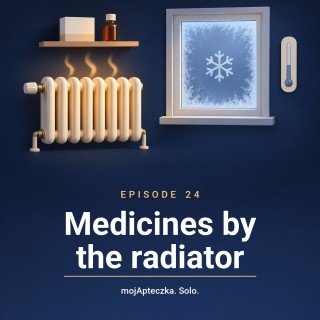
First cold evening of the year. I turn the kitchen radiator right up, reach into the
Download transcript (.vtt)
0:00
0:06
0:14
0:22
0:27
0:35
0:40
0:47
0:53
1:00
1:01
1:08
1:09
1:15
1:22
1:28
1:30
1:35
1:36
1:42
1:44
1:50
1:57
1:58
2:08
2:14
2:19
2:25
2:31
2:37
2:38
2:40
2:45
2:47
2:54
2:57
3:05
3:12
3:14
3:19
3:22
3:31
3:38
3:45
3:48
3:58
4:00
4:06
4:12
4:14
4:17
4:19
4:26
4:36
4:40
4:45
4:52
4:58
5:00
5:06
5:12
5:19
5:21
5:27
5:29
5:38
5:47
5:52
5:58
6:07
6:14
6:19
6:26
6:30
6:35
6:42
6:47
6:51
6:54
7:00
7:06
7:10
7:17
7:23
7:31
7:35
7:41
7:44
7:45
7:49
7:50
7:55
8:01
8:06
8:11
8:17
8:21
8:27
8:28
8:29
8:35
8:40
8:44
8:46
8:54
8:57
9:02
9:10
9:14
9:19
9:22
9:28
9:34
9:35
9:37
9:43
9:50
9:52
9:55
10:01
10:05
10:08
10:14
10:18
10:23
10:28
10:34
10:39
10:42
10:50
10:51
10:56
11:02
11:09
11:17
11:22
11:27
11:35
11:40
11:43
11:48
11:55
12:00
12:06
12:12
12:17
12:24
12:25
cupboard above it for the tea, and my hand lands on the box of medicines. Warm. Properly
warm. And that's when it hit me. That box has been sitting there since spring, and for
the next six months it's going to warm up right alongside the tea.
Hello, I'm Tomasz Szuster, and I built the mojApteczka app. What you just heard was
Iza, my wife. And yes, that cupboard above the radiator is our cupboard.
Ours. Because it's handy. Anything that's handy ends up in the wrong place eventually.
And that's what today's episode is about. Back in the summer we did an episode on medicines
in the heat. The car in the sun, the beach bag, the south-facing windowsill. Today's the
winter edition.
But surely winter isn't a problem. It's cooler, and medicines like the cold. That's what I've
always heard.
It depends on the medicine. The conditions are in its leaflet. But in winter you suddenly
get two problems at once, pulling in opposite directions. Indoors there are spots that are
noticeably warmer than the rest of the room. And outside there's frost. In the car, on the
balcony, in the garage.
So in summer one enemy, and in winter two?
More or less.
Right. Let's start with my cupboard. What's wrong with the cupboard above the radiator? It's
hardly an oven.
It isn't. But warm air rises off a radiator when it's on. The cupboard above it can heat
up. And not just once, but every day for the whole heating season. October to April.
Six months.
Six months. And almost every box and every leaflet has a line about storage. For example,
do not store above 25 degrees. Those are the conditions the manufacturer tested the medicine's
stability in. And the expiry date on the box assumes you stick to them.
So if a medicine spends the winter above the radiator, the date on the box…
Might not be enough anymore. I'm not saying the medicine's definitely gone off. I'm saying
the date on its own stops giving you certainty. And that's not something we can settle at the
kitchen table.
So who do we ask?
The pharmacist. Sometimes they'll need extra information from the manufacturer to judge
it too.
Fine. And the windowsill? At my mum's there's a whole chemist's on the kitchen windowsill.
Drops, syrup, dad's blood pressure tablets.
In winter, the windowsill is a place of extremes. The radiator under the window warms it from below.
The cold comes off the glass. And when the sun's out, it shines straight onto the boxes.
Medicines on the windowsill get the lot.
I'll tell Irina. She'll be thrilled.
Tell her it's from the podcast. Then it's not your comment.
Very clever. And the bathroom? I know the bathroom's always bad. But why is it worse in winter?
It isn't worse, actually. A hot bath pushes up both the humidity and the temperature. And how long
that damp hangs about depends on the ventilation. The bathroom is a bad place for medicines all year
round, winter included.
Right. Now the second enemy. Frost. Where do medicines end up in the frost? Nobody keeps their medicine
cabinet on the balcony.
Maybe not on the balcony, but in the car. You come back from the chemist's. The bag stays on the back
seat because you're popping to the shop first. And then you forget about it overnight.
Don't look at me like that.
I'm not. I'm speaking generally.
You're speaking about me.
In winter, a car parked overnight can drop below zero inside. And plenty of leaflets have a line
that's easy to remember in winter. Do not freeze. It applies all year round, but in winter it gets very
real. And then what? Teaching the syrup spent the night in the car?
Then you don't judge it by eye. If you suspect it's frozen, even though the leaflet says not to
freeze it, or it looks different from usual, you don't guess. You take it to the pharmacy and tell
the pharmacist where it was and for how long. It's the pharmacist who decides what happens next.
And if it looks normal?
That's the most important rule of the whole episode. It only works one way. If it looks
different from how the leaflet describes it, or the blister pack's damp, or the packaging's damaged,
that's information for the pharmacist. But a medicine looking fine does not mean it is fine.
Some changes you simply can't see.
So the way it looks can warn me, but it can't reassure me.
Exactly. I couldn't have put it better.
Right. Now something specific. The 1st of November. All Saints Day. We drive to my parents,
visit the family graves, stay the night. Bash's medicines, mine, yours, all in one bag. What about
that? First, before we set off, I check the leaflets for what each of those medicines needs,
and I plan where the bag will be when we stop. At the cemetery car park, we can easily be there
two hours. Or three, if we bump into my aunt. Or three. So the bag of medicines doesn't wait in
the car, it comes with us. The car itself, cabin or boot, doesn't guarantee the conditions in the
leaflet. And if I'm not sure how to keep to them for the whole journey, I ask the pharmacist
before we leave. Second thing. When we get there, the bag comes into the house with us.
It doesn't spend the night in the car, outside Irena and Christoph's.
And when I bring it in from the cold, do I pop it on the radiator to warm up?
No, exactly not. The radiator's out. And remember, warming the box up doesn't settle anything.
If you're not sure the leaflet's conditions were kept to, you note where the bag was and for how
long, and you ask the pharmacist what to do with that particular medicine.
And the cool bag? We've got one from the summer.
It slows down heat exchange, but it doesn't control the temperature. And if any medicine needs to be kept
cold on the journey, I sought out how to transport it with the pharmacist. Because, for example,
a frozen ice pack touching a medicine can freeze it in places.
Ah, the irony. You protect it from the frost and end up freezing it yourself.
Right, Tomek. So, where am I meant to keep these medicines? Because if you take away the cupboard
above the radiator, the windowsill and the bathroom, I'm left with… nothing.
You're left with a spot that matches what the leaflet says. Usually that means away from
the radiator, the window and the steam, and out of the children's reach. For us, it'll
probably be the cupboard in the hall. The tall one.
The one with the hats?
The one with the hats. The hats are moving out.
The hats won't be happy.
I've turned it into a little autumn check. 15 minutes, no more.
1. You go round every place where there are medicines. Kitchen, bathroom, bedroom, handbag,
car. 2. You check what's been sitting by the radiator or somewhere cold.
3. For each medicine, you pick a spot that matches its leaflet. Fridge medicines stay in
the fridge. 4. You look at the expiry dates and at when you open the syrups. If the leaflet
says how long it can be kept once opened, that period doesn't extend the date on the
box. Whichever of the two comes first applies. The date on the box, or the date that period
gives you.
And 5?
5. And this is the most important one. You tell everyone at home where the medicines
are now. Because if you move the medicine cabinet and the rest of the family goes looking
for it in the old place, then one evening, with the temperature, you'll have everyone
ransacking the cupboards.
I know that evening. Leon standing in the kitchen shouting that there's no syrup and the syrups
in the other room.
Right. And where does your app come into all this? Because I can feel it coming.
It's coming. But first, to be straight, here's what the app does not do. It has no sensor.
It doesn't measure temperature. It doesn't know a medicine has spent the winter above the
radiator or the night in the car. And it won't judge whether it's still usable.
So what use is it to me in winter?
So that knowing where everything is doesn't live only in your head. Every medicine has a
location field. You type in plain text, hall cupboard, and it shows up on the medicines
card.
And when I move the medicine cabinet?
Then you update that field. And because we use a shared medicine cabinet, I see the same
list – me, you, and if need be, Grandma Elżbieta when she's looking after the kids.
Everyone can see where each medicine is.
And if I opened the syrup last week?
There's no separate field for the opening date. You write it in the medicine's note.
You can also add something like, don't leave in the car.
And the bag for going to my parents?
You can set up a separate cabinet, say, travel bag. That way the medicines travelling with you
don't get mixed up on one list with the ones staying at home.
And what the leaflet says about storage? Do I have to dig the leaflet out of the drawer?
If the medicines documentation in the app has a storage section, you can have a look there.
But to be straight, that section describes the active substance, not your particular pack.
So you still check the details on the box and in the leaflet. The app tells you where to
look. It doesn't replace the box.
OK. That actually sounds honest. I thought you were going to say the app sorts everything
out.
It doesn't. It helps you remember what you've got and where it is. It'll also remind you
when an expiry date is coming up. But whether a medicine is still alright after a winter above
the radiator is a question for the pharmacist. Not for me and not for your phone.
You know what's funniest? It's hardly secret knowledge. Leaflet first, then the spot. And
not above the radiator. Everyone knows that.
It's just that the cupboard above the radiator is closer.
Right. Tomorrow we move. Hats into the box on the balcony. Medicines into the hall.
Hats on the balcony is a very good idea. Hats don't come with a leaflet.
Or an expiry date.
Or an expiry date. If you'd like to give it a go, the link to the Moya Poteczka app
is in the episode description. The app is free and works offline. And if you enjoyed this episode,
share it with someone who keeps their medicines above the radiator.
One more thing before we go. This podcast is made with the help of artificial intelligence.
I wrote the dialogue myself, but the voices you're hearing aren't ours. They're AI-generated,
synthetic voices. We're telling you this straight out because we think it should be the standard
for any podcast made this way. Full details are in the show notes and in every episode description.
Until next time.
Until next time.