0:00Cold open: down to the last tablet on a Sunday
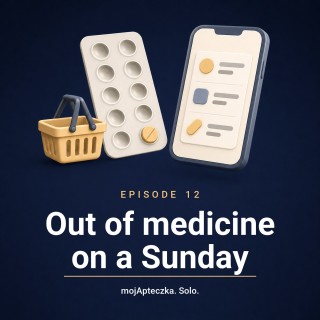
Sunday, half past seven in the evening. Your mum rings — she’s down to her last tablet of a medicine she takes every day. The chemist’s on the corner is shut, the next one no idea. And it’s the classic moment: you find out the pack’s empty on the last tablet, at the worst possible time. This episode is about how not to be caught out by that — from the supply-and-organisation side, without getting into treatment.
Straight off, honestly: this isn’t an episode about how much of anything to take, or when. We’re talking about counting supply, thresholds and a shopping list. What to do with a medicine and how to take it — that’s for you, your GP or your pharmacist.
Where the app helps (and where it deliberately doesn’t):
Plan B, not the main character: and if you don’t manage it in time and the medicine’s gone now — that’s the bit no app fixes. Sunday and late-evening pharmacy opening is patchy, and which one’s actually open keeps changing. The honest way to check is to ring 111, the non-emergency line, and they’ll point you to a pharmacy that’s open — that’s a real-world resource, not something the app does. The app doesn’t do the pharmacy scramble.
The point: everything else — the threshold, the notification, the shopping list — is there so you never have to reach for plan B at all. “There’s probably some left” isn’t a number you can rely on. The app turns it into an actual number. What you do with that is your decision.
Materials:
⸻
About AI in this episode. The dialogue was written by Tomasz Szuster. The voices you hear are AI-generated synthetic voices — not recordings of the hosts. We say this straight out, because we think it should be the standard for any podcast made this way. Full details in the show notes and in the episode outro.