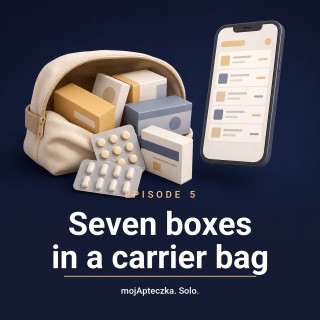
You know what I found in my mum's handbag yesterday?
Download transcript (.vtt)
0:00
0:04
0:05
0:08
0:10
0:13
0:18
0:21
0:23
0:25
0:27
0:30
0:32
0:37
0:42
0:44
0:47
0:50
0:52
0:56
0:58
1:03
1:04
1:08
1:12
1:13
1:20
1:22
1:26
1:29
1:30
1:32
1:36
1:42
1:45
1:51
1:54
1:56
1:59
2:00
2:03
2:06
2:10
2:12
2:15
2:16
2:19
2:22
2:24
2:24
2:29
2:31
2:34
2:37
2:39
2:43
2:45
2:48
2:49
2:50
2:53
2:55
2:57
2:59
3:02
3:03
3:05
3:05
3:07
3:08
3:11
3:13
3:14
3:17
3:20
3:25
3:26
3:31
3:32
3:35
3:41
3:42
3:44
3:46
3:48
3:50
3:54
3:56
3:57
4:01
4:06
4:09
4:10
4:13
4:17
4:19
4:21
4:22
4:23
4:24
4:26
4:28
4:30
4:32
4:36
4:37
4:40
4:43
4:47
4:49
4:52
4:53
4:54
4:56
4:58
5:02
5:02
5:06
5:10
5:14
5:17
5:20
5:21
5:23
5:25
5:29
5:33
5:36
5:40
5:42
5:46
5:52
5:53
5:57
6:00
6:01
6:07
6:08
6:12
6:14
6:17
6:19
6:22
6:24
6:30
6:32
6:33
6:36
6:39
6:44
6:48
6:52
6:54
6:59
7:03
7:05
7:07
7:09
7:11
7:15
7:18
7:19
7:21
7:23
7:26
7:29
7:31
7:33
7:36
7:40
7:44
7:47
7:48
7:52
7:56
7:57
7:59
8:00
8:02
8:04
8:07
8:12
8:16
8:18
8:22
8:25
8:29
8:32
8:35
8:37
8:41
8:42
8:45
8:47
8:51
8:55
8:58
9:01
9:04
9:05
9:07
9:10
9:13
9:16
9:19
9:22
9:24
9:28
9:31
9:32
9:36
9:40
9:42
9:45
9:48
9:50
9:52
9:55
9:56
9:59
10:01
Irina's?
Seven boxes of medicine.
Seven.
She tipped the whole lot out onto the kitchen table
because she wasn't sure she'd actually taken what she was meant to that morning.
Seven? And all of them on repeat?
I think so.
One from the cardiologist,
two from the GP,
two for her joints from the rheumatologist,
and two she couldn't even name.
The pink one and the little white one.
Hello, I'm Thomas Schuster and I built the Moya Pteczka app.
And what Isar's just described has a name.
It's called Polypharmacy.
And it isn't the exception, it's the norm.
The norm?
Because my mum's convinced she's the only one like this.
That she's the one who's lost track.
If she's lost track, then so have an awful lot of people her age.
Look at the numbers.
There's a big Polish study, Professor Kardas, 2021.
They went through the prescription records of nearly 38 million people.
And what came out?
Among polls over 65, 43% are on five medicines or more.
43%!
That's nearly one in two, at that age.
And over 80, more than half.
56%.
All right.
But that doesn't mean somebody's made a mistake, does it?
If the doctors prescribed it all, then presumably that's what's needed.
And here's the hardest thing in the whole story.
Because each of those medicines on its own usually has a good reason behind it.
The cardiologist was looking at her heart.
The rheumatologist at her joints.
Each of them saw their own slice.
Well, quite.
So, where's the problem?
That none of them ever saw the whole thing.
Your typical 70-year-old has three or four specialists.
And they don't talk to one another.
There's no single place where somebody sits down and says,
Hang on.
She's taking all of this at once?
So everyone sees their bit.
Nobody sees the whole picture.
Exactly.
And that's when you get something called a prescribing cascade.
One medicine causes a side effect.
The patient takes that to another doctor.
Who, not knowing it's a side effect of the first medicine,
prescribes another.
For a symptom that wouldn't be there if it weren't for that first one.
Give me an example.
Because that sounds a bit abstract.
Happily.
A blood pressure tablet.
In some people, it makes their ankles swell.
So off the pensioner goes to the doctor.
My legs are swelling up.
She's given a water tablet.
The water tablet flushes out potassium.
Potassium drops.
And now there's weakness.
Cramp.
Another appointment.
Another medicine.
And nobody along the way went back to that first one.
The blood pressure tablet.
Nobody.
Because nobody saw the whole road from the start.
And it isn't anyone's spite or stupidity.
There's simply no one whose job it is to look at the whole list at once and go through
it with the doctor.
Because what to actually do about it, only a doctor can judge that.
Right.
Now tell me something practical.
Because when mum tipped those boxes out on the table, what was I meant to do?
I'm not a doctor.
I can't tell whether any of it clashes.
And you don't have to.
That's not your job.
Your job is one thing.
Making sure the doctor she goes to gets the full list.
Not seven boxes in a carrier bag.
A list.
But where am I supposed to get a list like that from?
That's exactly why I built a report for the GP into the Moya Pteczka app.
You type in, or scan, all of your mum's medicines.
Once at the start.
Then you update it whenever something changes.
And then, with one tap, you turn it into a document.
And it's not just the brand names on there.
It's the active ingredient of each medicine.
The schedule.
What she takes.
And when.
All grouped under one person.
The active ingredient?
What do I want that for?
When I've got the name off the box?
Because that's the exact moment the duplicates show up.
Listen.
Two boxes can have completely different names on them.
And the same substance inside.
Somebody's taking one because the cardiologist prescribed it.
And another because the GP did.
Under two different names.
The same thing.
Twice.
Hang on.
You know what I did with mum's list?
I printed it off and took it to her GP.
And?
He looked at it for ten seconds and said,
So, why's she taking two lots of the same thing for her stomach?
And I didn't even know it was the same thing twice.
To me, they were two different names.
Because they were two different names.
Same substance.
Two boxes.
And that's it exactly.
The GP saw in ten seconds something you had no way of knowing.
And that he'd have had no way of getting out of your mum in a ten-minute appointment.
And interactions.
Because that scares me more than a duplicate does.
There's a second thing.
Before you even add a new medicine to your mum's list, the one the GP's just prescribed,
you can check in the app whether it clashes with what she's already on.
You pick the medicines.
The app compares them in an interactions database.
And shows you whether there's anything and how serious.
Wait.
But if the app tells me two medicines clash, am I meant to stop them?
No.
And this is the most important sentence in the whole episode for me.
The app doesn't stop anything.
And it doesn't tell you to take anything.
It signals.
It shows you, careful, there's an interaction here.
And here's how serious.
And the decision, what to do about it, belongs to the GP or the pharmacist.
Always.
Right.
That at least sounds honest.
Because most apps carry on as though they know everything.
Because if the app said, stop this medicine, and someone did, without a doctor,
that would be more dangerous than the polypharmacy itself.
I put the facts in your hands.
The judgement stays with the doctor.
You know what got to me most in all this?
That I live in a different town from Mum.
And that's the third thing.
You can be set up as her carer.
Mum has her own medicine cabinet.
Her own medicines.
And you, from your own phone, can see what's planned for today.
And what she's ticked off as taken.
A bar.
How many of today's doses are ticked?
How many are left?
Without ringing up at seven in the evening.
Mum, did you take the pink one?
Not once.
Because that question gets you nowhere anyway.
It gets you nowhere.
She always says, yes, yes, and then she's not sure.
And I'm miles away and still none the wiser.
And this way, you don't have to ask.
You just see.
And by the way, everything we're talking about here,
these really are features in the Moya Potechka app.
It's not an advert.
Just so we're clear.
Hmm.
Just so we're clear.
And you know what's interesting?
That elsewhere, they've already got a handle on this.
In Germany, a patient who's regularly on at least three prescribed medicines
has a right to a single medication plan.
On paper, yes.
But one plan shared across all their doctors.
And here in the UK, you can get a medication review.
Your GP or a pharmacist going through the whole lot
with checklists that help them catch the medicines
that might be unnecessary or risky.
And the ones someone's missing.
So we're actually not badly off here?
Not badly off at all.
But a review happens now and again
and someone still has to walk into that room
with the complete up-to-date picture.
Seven boxes in a carrier bag won't do it.
And between reviews, keeping that picture current,
more often than not, that falls to the family.
So it's us again.
Us again.
But at least now there's a tool for it.
So it isn't a heap of boxes in a carrier bag,
but one page the GP reads in ten seconds.
If you'd like to give it a go,
that'd be the Moya Poteczka app.
The app is free and works offline.
You'll find the link in the episode description.
And if this episode was any use to you,
pass it on to someone who's just been handed a carrier bag
of their parents' medicines.
One more thing before we go.
This podcast is made with the help of artificial intelligence.
I wrote the dialogue myself,
but the voices you're hearing aren't ours.
They're AI-generated, synthetic voices.
We're telling you this straight out
because we think it should be the standard
for any podcast made this way.
Full details are in the show notes
and in every episode description.
Until next time.
Until next time.